

The short answer
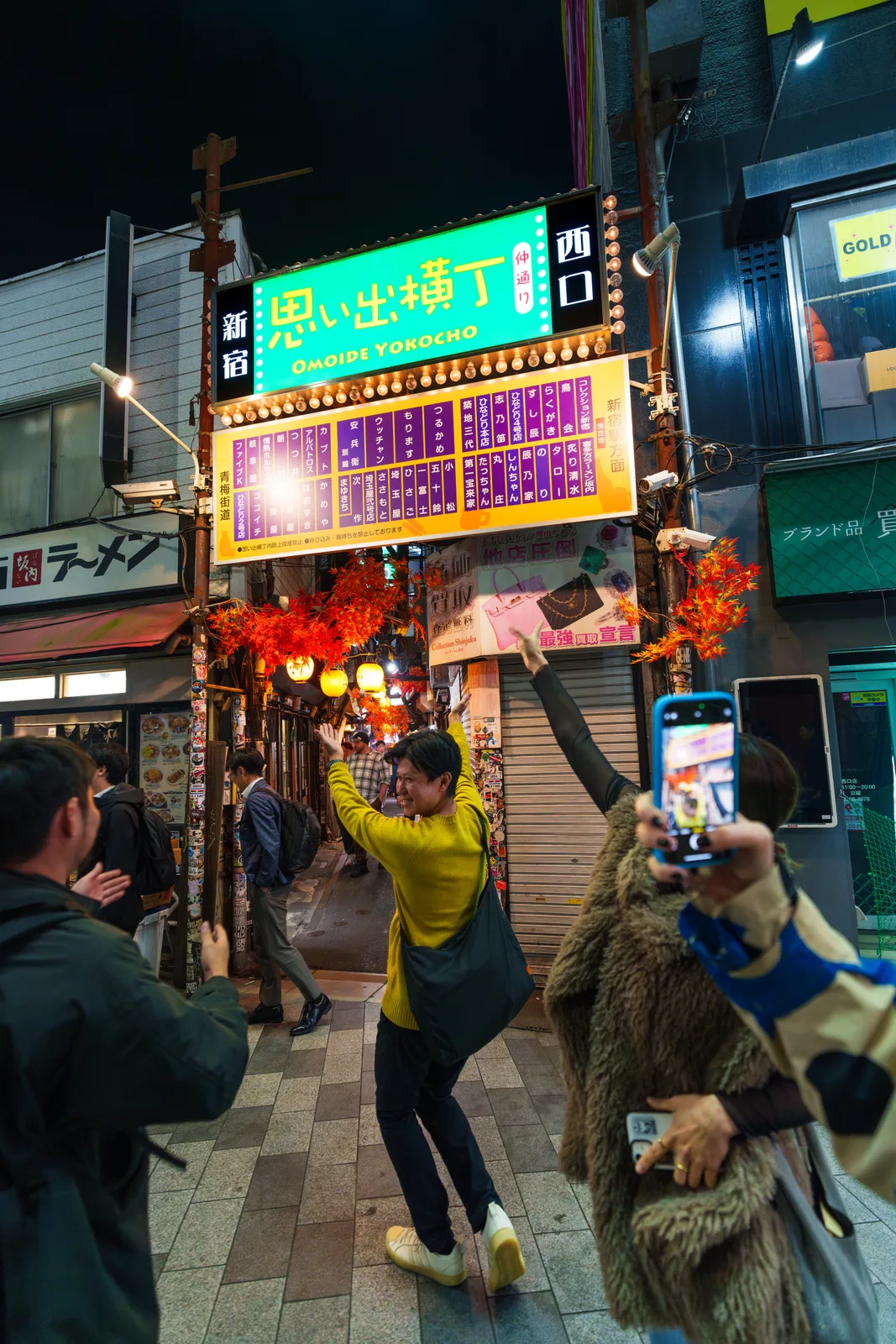
Short answer: both, in one evening — they do different jobs. Omoide Yokocho is for eating: a lantern-lit lane of tiny yakitori and motsuyaki counters beside Shinjuku Station's west exit, best from around 17:00. Golden Gai is for drinking: six alleys of 200+ themed micro-bars on the east side, best after 21:00. They're a 10-minute walk apart — most visitors can comfortably do both in a single evening — so the classic Shinjuku night is dinner in the Yokocho first, bar-hopping in Golden Gai after.
Want to do this with a local? Shinjuku Food & Drink Night Tour — From $130 (~¥20,500), small group, led by our own guides.
Two survivors, two personalities
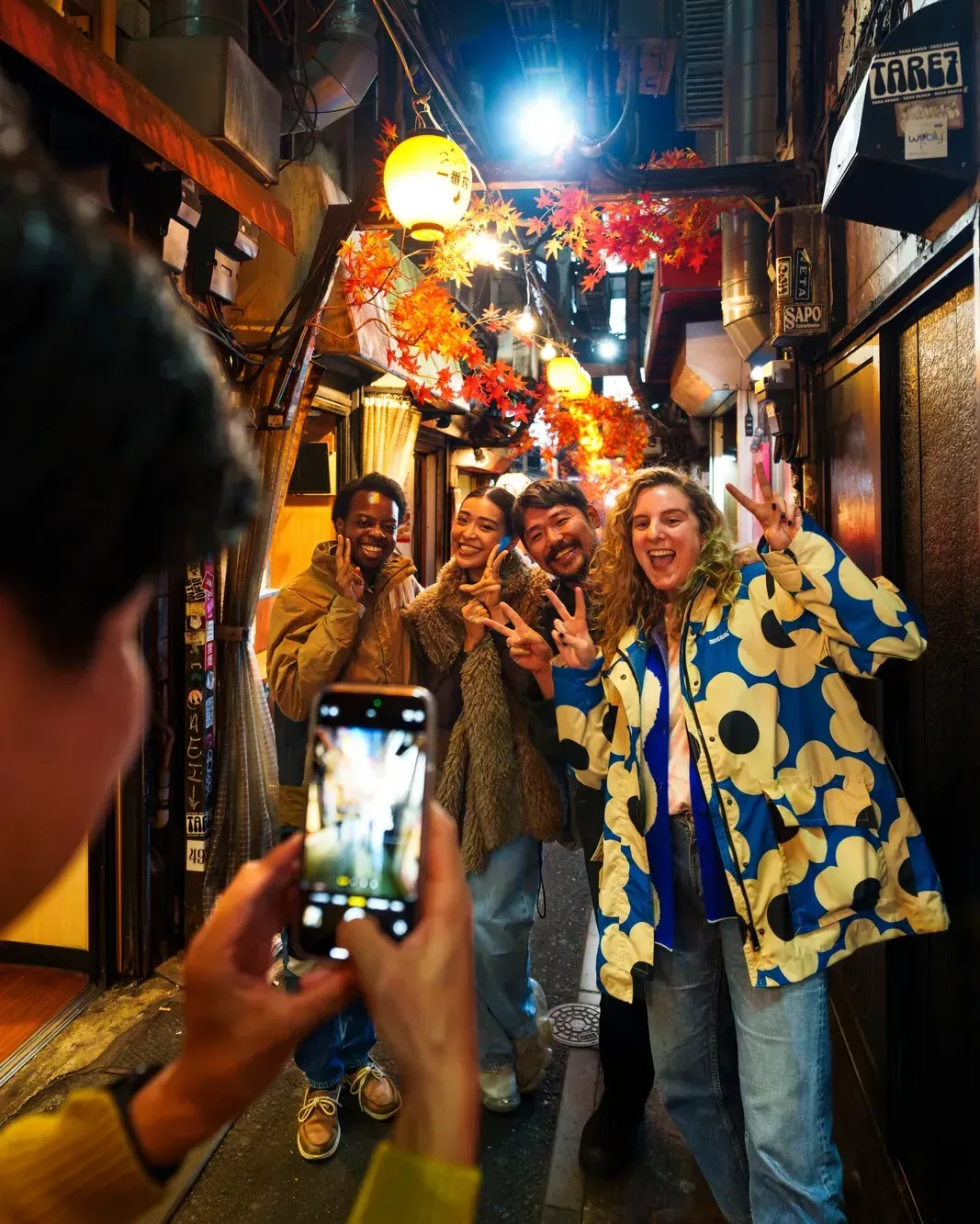
Both alleys are scraps of post-war Tokyo that refused to be redeveloped, which is why they look like nowhere else in the city. But they evolved in opposite directions. Omoide Yokocho — “Memory Lane,” the name locals prefer to the grim old nickname “Piss Alley” — grew up as a black-market food strip, and food is still its soul: charcoal smoke, skewers turning over the grill, and counters where eight strangers eat elbow-to-elbow.
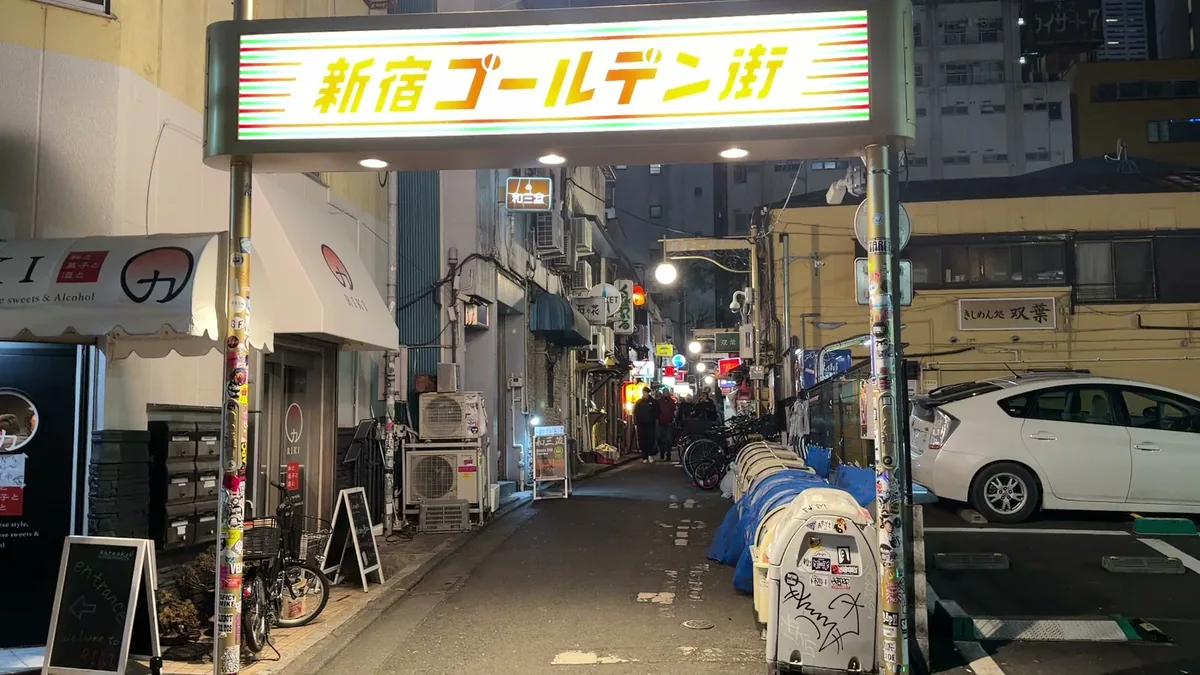
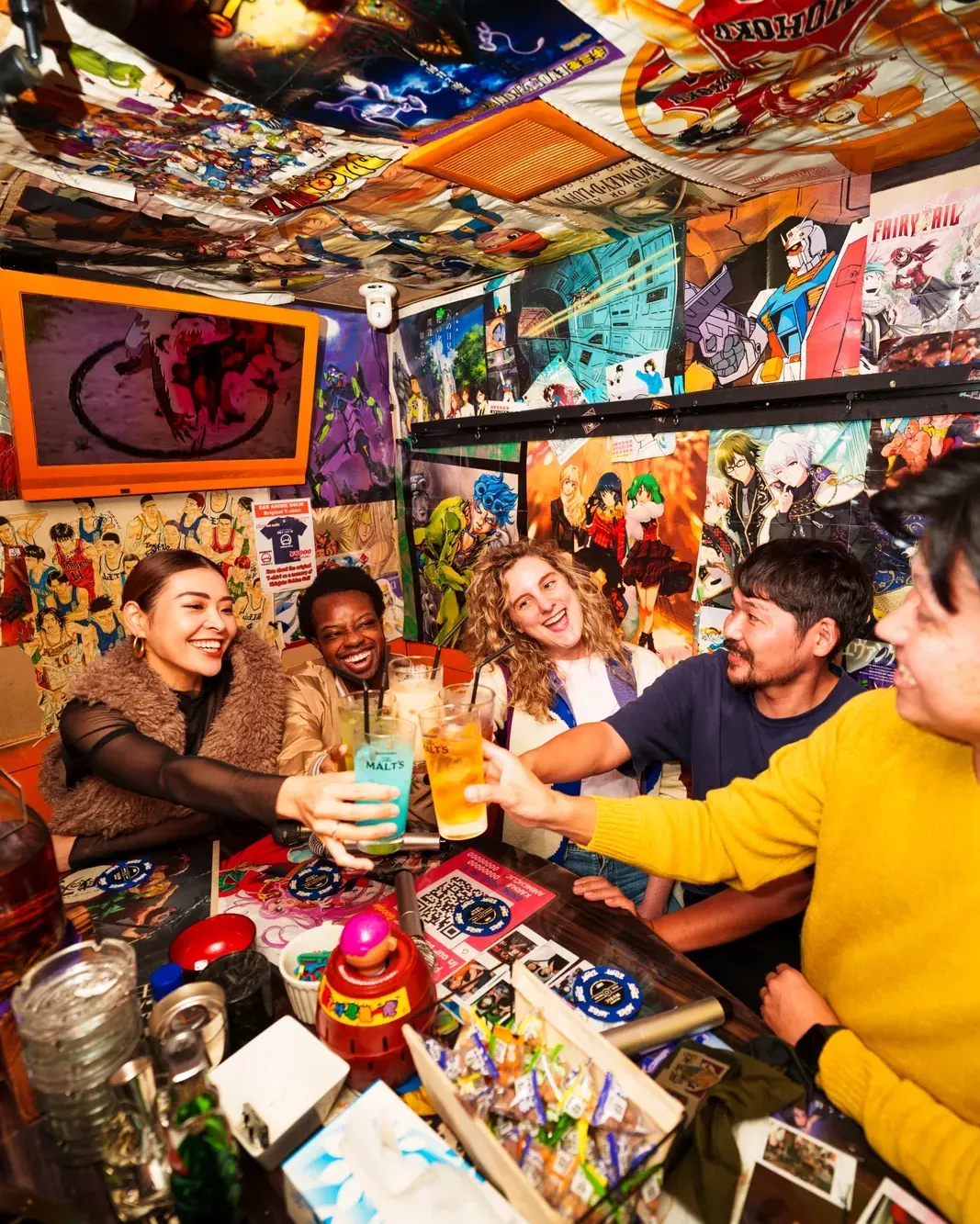
Golden Gai went the other way. Its two-story wooden rowhouses became a warren of over 200 bars, most seating fewer than ten, each with its own theme and its own master or mama behind the counter. You don’t really go to Golden Gai to eat — you go to drink and, above all, to talk.
Food, prices, and when to go
Omoide Yokocho: expect yakitori and grilled offal skewers around ¥200–¥400 each, beer or a lemon sour at ¥500–¥900, and no cover charge at most stalls. Counters fill fast after office hours; going right at opening (around 17:00) gets you seats together. A satisfying dinner runs roughly ¥2,500–¥4,000 a head.
Golden Gai: most bars open between 19:00 and 21:00 and charge a cover of ¥700–¥2,000 for your seat — a table charge in practice, legitimate rent for one of only eight chairs. With drinks at ¥900–¥1,300, budget ¥2,500–¥4,500 per bar. The alleys feel best from 21:00, when the counters are lively but not yet packed.
Put those timetables together and the route writes itself: skewers and a first drink in Omoide Yokocho at golden hour, then cross to the east side — past Kabukicho’s neon — and finish the night deep in Golden Gai. That west-to-east arc is exactly how our evening food tour runs, because it’s how Shinjuku locals actually do it.
Which one, if you only have time for one?
Pick by appetite. If you want the iconic “tiny smoky alley dinner” and a real meal, choose Omoide Yokocho — it’s also right at the station, so it fits even a tight schedule. If you’re after conversation, characters, and a night you’ll tell stories about, choose Golden Gai; its whole point is sitting down long enough to talk to the bartender.
The honest caveat for both: the best counters aren’t the ones with the longest tourist queues, and the difference between a flat experience and a great one is which door you pick. That judgment is what a local brings — in either alley.
Planning your Shinjuku evening: putting it all together
The west-to-east arc — skewers in Omoide Yokocho, then on to Golden Gai — is the most satisfying way to experience both alleys in a single night. Start at the west exit around 17:00 for a seat before the after-work rush, then cross to the east side after 21:00 when Golden Gai's tiny counters hit their stride.
Want to go deeper on the east side? Our <a href="/guides/golden-gai-guide">detailed Golden Gai guide</a> covers which alleys to explore, cover-charge etiquette, and how to pick a bar that suits your vibe.
If you'd rather leave the route-planning to a local, our <a href="/tours/nightlife">Shinjuku Nightlife Tour</a> covers both alleys in one guided evening — reserved counter seats, no wrong-door guesswork, and all food and drinks included.
Frequently asked questions
Can I do Omoide Yokocho and Golden Gai in one night?
Easily — they’re about a 10-minute walk apart on opposite sides of Shinjuku Station. Eat in Omoide Yokocho from around 17:00–19:00, then head east to Golden Gai from 21:00 when its bars come alive.
Which is cheaper, Omoide Yokocho or Golden Gai?
Omoide Yokocho, usually: skewers at ¥200–¥400 and no cover charge at most stalls, versus Golden Gai’s ¥700–¥2,000 covers plus drinks. A full evening across both typically runs ¥6,500–¥10,000 per person.
Is Omoide Yokocho touristy now?
It’s popular, but office workers still outnumber cameras on weeknights, and several counters remain genuinely local. The trick is picking a stall where regulars eat — posted prices and a grill you can see are good signs.
Do the stalls in Omoide Yokocho take credit cards?
Some do, many don’t. Bring cash — ¥6,500 per person comfortably covers dinner and drinks in the Yokocho, and Golden Gai bars are often cash-only too.
More local guides
- Is Kabukicho Safe at Night? (And Is It Dangerous?) — A Local's Honest Answer →
- Is Golden Gai a Tourist Trap? No — Here's the Real Guide for First-Timers →
- Is Tsukiji Still Worth Visiting? What Actually Moved to Toyosu →
- Tokyo Izakaya Etiquette: The Rules First-Timers Actually Need →
- Are Tokyo Food Tours Worth It? An Honest Answer from Guides →
- Visiting Meiji Shrine: Etiquette, Best Time & What to Expect | Tokyo Local Guide →
- What Is an Izakaya? How It Differs from a Bar or Restaurant →
- Is Tokyo Nightlife Fun as a Solo Traveler? (Yes — Here's Why It Works) →
- What Is Nomihodai? All-You-Can-Drink in Tokyo Explained (+ Izakaya Tips) →
- What to Eat at Tsukiji Outer Market: A Must-Try List →
- Shimokitazawa, Koenji & Nakano: Where Young Tokyo Actually Hangs Out →
- What Can You Do on a Private Tokyo Tour? Real Examples & How It Works →
- Do You Tip in Tokyo? Restaurants, Taxis, Guides & Hotels Explained →
- How to Find Local Experiences in Tokyo (Without the Tourist Traps) →
- One Perfect Night in Shinjuku: What to Do from 5pm to Midnight →
- Shinjuku Izakaya Tour vs. Going On Your Own: Which Is Better for a First Night? →