The short answer
Nomihodai (飲み放題) means 'all-you-can-drink' and refers to a fixed-price, time-limited deal — typically 90 minutes to two hours — offered at izakayas and restaurants across Japan. You pay a set fee on top of your food order and drink as much as you like from a set menu of beer, sake, shochu, highballs, wine, and soft drinks for the duration. Beyond the deal itself, Japanese drinking culture comes with its own quiet rules: you pour for others rather than yourself, you wait for the kanpai (toast) before drinking, and you never have to down alcohol if you'd rather not — ordering oolong tea (ウーロン茶) is a completely normal and face-saving way to stay in the round without touching a drop.
How nomihodai actually works
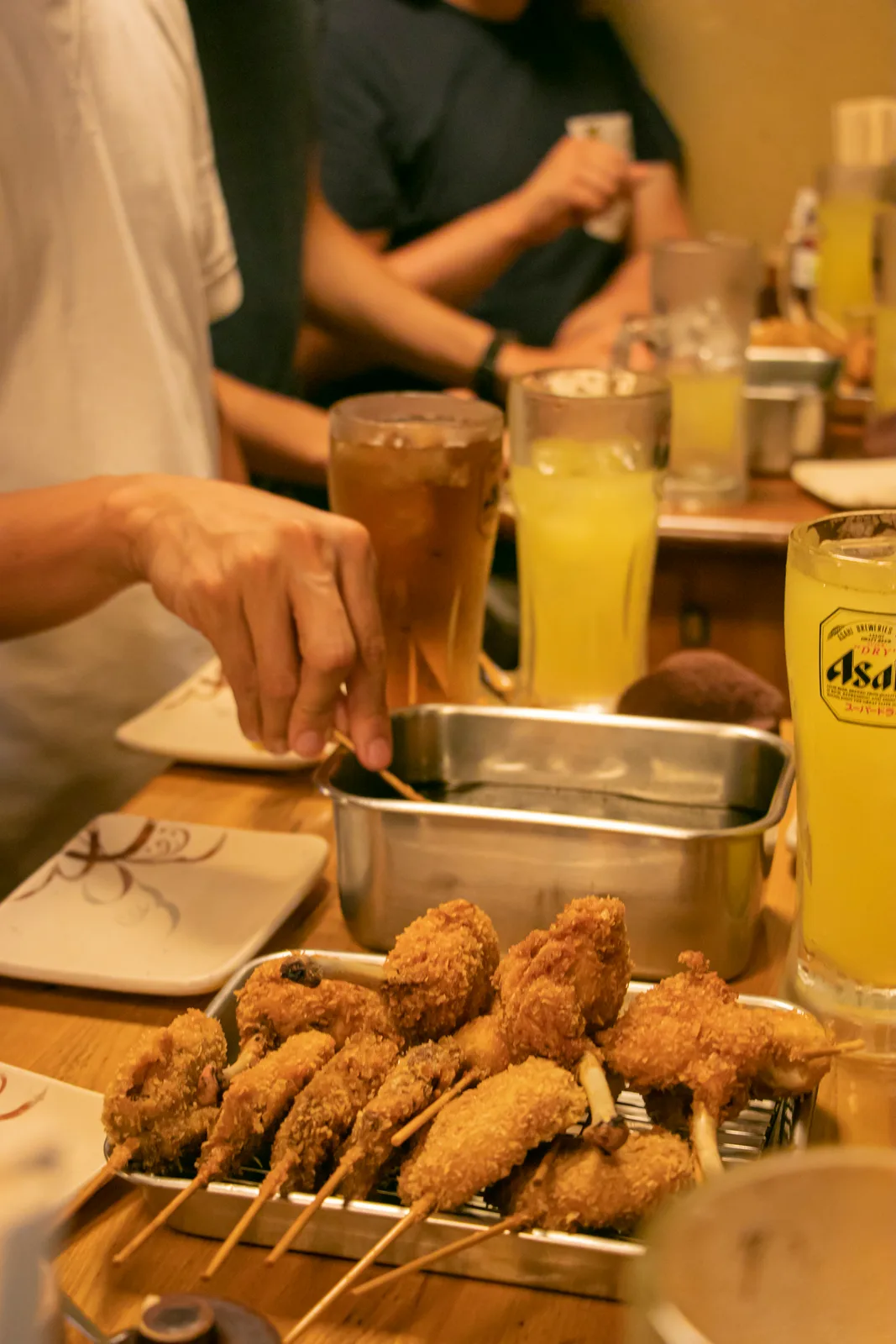
When you sit down at an izakaya that offers nomihodai, you'll usually choose between the standard course and a food-plus-drinks package. The drinks menu is a subset of the full bar list — typically draft beer, a house sake, shochu, chuhai (canned-style cocktails), a basic wine, and soft drinks. Premium spirits and craft options usually cost extra. You order each round separately from a server or, increasingly, from a tablet at the table; you don't pour your own beer from a tap.
The time limit is real and the staff will remind you when you're approaching it. Two hours is the most common window at casual izakayas; some chains run 90-minute sessions on busy nights. It is considered polite to order your last drinks a few minutes before the cutoff rather than scrambling at the bell. When the session ends, the drinks stop — food orders may continue depending on the venue.
On price: nomihodai add-ons at casual izakayas generally run in the ¥1500-3000 range per person, though this varies by venue, district, and what the package includes. Premium izakayas and hotel restaurants charge more. The deal makes sense if your group drinks steadily; if you're a one-drink-and-done type, ordering à la carte will often cost less.
Kanpai etiquette and the pouring culture
The kanpai is not optional. Even if your beer arrives and you're thirsty, you wait until everyone at the table has a drink in hand and someone — usually the most senior person or the host — raises their glass and says 'kanpai.' Eye contact during the toast matters; looking away is considered rude in the same way that skipping the toast entirely would be. After the first round, kanpai moments can repeat informally whenever someone gets a refill.
Pouring for others, known as tsugiai (注ぎ合い), is one of the most visible social rituals in Japanese group drinking. The idea is that you never fill your own glass — you watch the people around you and top them up when their drink is low, and they do the same for you. It's an act of attention and care rather than obligation. If someone pours for you, hold your glass with both hands or at least support it with one hand while they pour; putting your glass flat on the table while someone fills it is considered inattentive. When you want to slow down, simply leave your glass full — a full glass is a signal that you don't need more.
If you don't want alcohol at all, the cleanest move is to order oolong tea (ウーロン茶) from the start and keep it full. Nobody at a Japanese table will pressure you or comment on it. Soft drinks are a normal part of nomihodai menus precisely because not everyone in a group drinks. If you're in a nomihodai session on one of our Shinjuku nightlife evenings, our guides handle the ordering in Japanese and will make sure your glass — alcoholic or not — is always part of the round.
When nomihodai is worth it — and when it isn't
Nomihodai is designed for groups eating together over a long session, and it works best in that context. If you're at a standing bar or a small Golden Gai spot, you won't see it — those venues sell drinks individually, and part of their charm is the slow, single-drink intimacy of a tiny room. For a full rundown of how Golden Gai bars work, including cover charges and how to pick the right door, see our dedicated Golden Gai guide.
For Western travelers, a few things are worth knowing before you dive into a nomihodai session. First, the drinks tend to come in smaller pours than you might expect — a Japanese beer glass is often 300–350 ml rather than a pint. Second, some venues require the whole table to order the nomihodai package, which means you can't have one person drink à la carte while others are on the unlimited plan. Third, nomihodai menus almost never include top-shelf whisky or craft beer, so if you're a drinks-focused traveler, ordering the specific bottle you want off the regular menu may be more satisfying.
The honest case for skipping nomihodai: if you're visiting a serious sake bar or a whisky specialist, the point is the specific drink in front of you, not volume. If you're at a small izakaya counter with six seats and a chef who wants to talk to you about what you're drinking, ask what they recommend and order one thing at a time. The drinking culture conversation — the tsugiai, the kanpai, the quiet attention to everyone's glass — happens exactly the same way whether or not there's a time limit on the evening.
Frequently asked questions
Do I have to drink alcohol at a nomihodai session?
No. Soft drinks — including oolong tea, green tea, juice, and cola — are included in every nomihodai menu. Ordering oolong tea is completely normal and nobody will think less of you for it. If you're worried about being the only non-drinker at the table, you won't be: at most izakaya group dinners, at least one person opts out of alcohol, and the etiquette of pouring for others applies equally to soft drinks.
What does kanpai mean and when do you say it?
Kanpai (乾杯) literally means 'dry cup' and is the Japanese equivalent of 'cheers.' You say it when everyone at the table has a drink in hand, glasses are raised (usually to eye level, not clinked hard against each other), and everyone makes eye contact. Wait for the kanpai before you take your first sip, even if your drink arrived a few minutes earlier. After the first toast, informal kanpais throughout the meal are fine.
Is it rude to pour your own drink at a Japanese dinner?
In a traditional izakaya group setting, yes — pouring your own drink suggests no one is paying attention to you, or that you're not paying attention to others. The custom is to watch your neighbours' glasses and refill them when they're low. That said, at casual bars or when drinking alone, self-pouring is completely fine. The social ritual of tsugiai applies specifically to group meals where everyone is drinking together.
How long does a typical nomihodai session last?
Most casual izakayas offer 90-minute or two-hour sessions. Two hours is the most common. Some venues extend to two-and-a-half hours if you add a premium food course. The clock usually starts when the first drinks arrive, not when you sit down, though this varies by venue. Staff will typically give you a five- or ten-minute warning before the session ends.
More local guides
- Is Kabukicho Safe at Night? A Local’s Honest Answer →
- Golden Gai for First-Timers: Etiquette, Cover Charges & How to Pick a Bar →
- Is Tsukiji Still Worth Visiting? What Actually Moved to Toyosu →
- Omoide Yokocho vs Golden Gai: Which Should You Visit? →
- Tokyo Izakaya Etiquette: The Rules First-Timers Actually Need →
- Are Tokyo Food Tours Worth It? An Honest Answer from Guides →
- Visiting Meiji Shrine: Best Time, Etiquette & What Not to Do →
- What Is an Izakaya? How It Differs from a Bar or Restaurant →
- Is Tokyo Nightlife Fun as a Solo Traveler? (Yes — Here's Why It Works) →
- What to Eat at Tsukiji Outer Market: A Must-Try List →